Institutions in Transition: How Museums and Galleries Navigate the Age of AI Art
A New Institutional Challenge
Museums and galleries around the world are entering a phase of profound transformation. Generative art—once considered a technological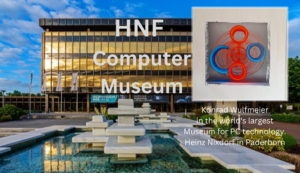 curiosity—is rapidly becoming a central topic in contemporary culture. Institutions now face a challenge they have not encountered in decades: integrating a new artistic paradigm that is neither purely digital nor purely traditional. AI art disrupts established categories of authorship, originality, and materiality. It demands new forms of presentation, new interpretive strategies, and new curatorial expertise. Institutions that respond early will not only adapt—they will shape the cultural narrative of this emerging era.
curiosity—is rapidly becoming a central topic in contemporary culture. Institutions now face a challenge they have not encountered in decades: integrating a new artistic paradigm that is neither purely digital nor purely traditional. AI art disrupts established categories of authorship, originality, and materiality. It demands new forms of presentation, new interpretive strategies, and new curatorial expertise. Institutions that respond early will not only adapt—they will shape the cultural narrative of this emerging era.Historical Parallels: Learning from the Rise of Video Art
The current moment echoes the early years of video art. When video first entered the art world, institutions struggled to understand how to exhibit, collect, and preserve it. Many dismissed it as a passing trend. Yet within a decade, video art became a core component of museum practice.
AI art is following a similar trajectory—but at a far greater speed.
The difference is scale: generative systems can produce thousands of works, evolve rapidly, and blur the boundaries between artist, tool, and system. Institutions must therefore develop frameworks that go beyond traditional media categories. The lesson from video art is clear: those who embrace the new medium early become cultural leaders.
who embrace the new medium early become cultural leaders.Why Institutions Need AI Curators
As generative art enters museums and galleries, institutions face a series of complex questions:
– How do we present AI‑generated works in a way that reveals their conceptual depth?
– How do we explain the relationship between human intention and machine output?
– How do we evaluate artistic quality in a field defined by variation and iteration?
– How do we distinguish meaningful artistic authorship from automated production?
– How do we build collections that remain relevant as technology evolves?
These questions cannot be answered through technical expertise alone. They require curatorial intelligence—the ability to interpret, contextualize, and communicate meaning.
This is why the role of the AI curator becomes essential.
The AI curator is not a technician but a mediator between artist, system, and institution. They understand generative processes, recognize artistic signatures, and translate complexity into cultural relevance.
Institutional Recognition as a Cultural Signal
Institutional validation plays a crucial role in shaping the perception of new artistic movements. When museums exhibit generative art, they signal that the medium has cultural significance beyond technological novelty.
The presence of works by Konrad Wulfmeier in the Leonardo da Vinci Museum and the HNF, the world’s largest computer museum, illustrates this shift. These exhibitions demonstrate that generative art is not an experimental fringe practice—it is entering the canon of institutions that shape the history of art and technology.
Such recognition strengthens the legitimacy of AI art and encourages other institutions to explore the field. It also highlights the need for curatorial frameworks that can articulate the conceptual and aesthetic dimensions of generative work.
New Forms of Presentation
Generative art challenges traditional exhibition formats. It can be:
– static
– dynamic
– interactive
– process‑based
– hybrid (physical + digital)
– continuously evolving
Institutions must therefore rethink how they present artworks.
A generative piece may require:
– screens or projections
– physical prints
– immersive environments
– real‑time rendering
– archival documentation of the system
– explanations of the generative process
The AI curator plays a central role in designing these formats. They determine how much of the system should be visible, how the audience should engage with the work, and how the exhibition can reveal the interplay between human intention and machine behavior.
This is not a technical decision—it is a curatorial one.
Interpretation and Mediation: Making AI Art Understandable
Public understanding is essential for institutional success. Visitors want to know:
– What is generative art?
– How does it work?
– What is the role of the artist?
– What is the role of the machine?
– Why does this artwork matter?
Without clear mediation, AI art risks being misunderstood as either purely technical or purely random.
The AI curator provides the interpretive bridge.
They translate the complexity of generative systems into accessible language without oversimplifying the artistic depth. They help audiences understand that AI art is not about automation but about expanded authorship, systemic creativity, and new forms of meaning.
This interpretive work is crucial for building trust and engagement.
The Future of Institutional Practice
As generative art becomes more prominent, institutions will need to develop new strategies for:
– acquisition
– conservation
– exhibition design
– educational programming
– interdisciplinary collaboration
– long‑term digital stewardship
Generative systems evolve quickly, and institutions must adapt to ensure that artworks remain accessible and meaningful over time.
The AI curator will be central to this evolution. They will guide institutions through the complexities of collecting and presenting works that exist at the intersection of art, technology, and cultural theory.
The future of institutional practice will be hybrid—combining traditional curatorial methods with new forms of technological literacy.
Institutions that embrace this hybrid approach will not only remain relevant—they will lead the cultural conversation.